What is this article about?
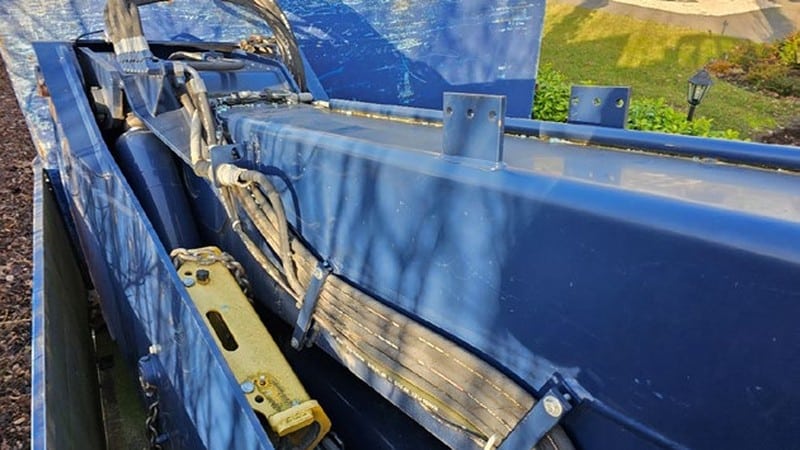
A burst hydraulic hose is harmless if it only costs a few drops of oil. It’s expensive if it shuts down the machine, contaminates the floor, endangers an employee, or causes a fire. And it becomes a point of contention as soon as the question arises: Who pays? In my work as a machinery expert, I encounter this issue in a wide variety of situations. Sometimes it’s the insurance company that classifies the replacement as maintenance. Sometimes it’s a buyer who claims a burst hose as a defect. Sometimes it’s a court that wants to know how often a hose actually needs to be replaced.
In this article, I explain what DIN 20066 recommends regarding hydraulic hose replacement, what obligations the operator has under the German Ordinance on Industrial Safety and Health, and how to distinguish between wear and tear and a genuine defect. This is based on an expert opinion I prepared for a regional court. The parties involved and the case number will, of course, remain anonymous. However, the technical findings can be readily generalized.
Quick answer for those in a hurry
Hydraulic hose assemblies age, even when stored correctly and subjected to permissible stress. According to DIN 20066, the service life of a hose assembly, including any storage time, should not exceed six years. The storage period alone should not exceed two years. For operational purposes, this means:
A machine that runs for more than six years will need new hoses several times during its lifetime.
The operator is responsible for ensuring timely replacement. This is not a courtesy, but a requirement of the Industrial Safety Ordinance.
Why do hydraulic hoses age at all?
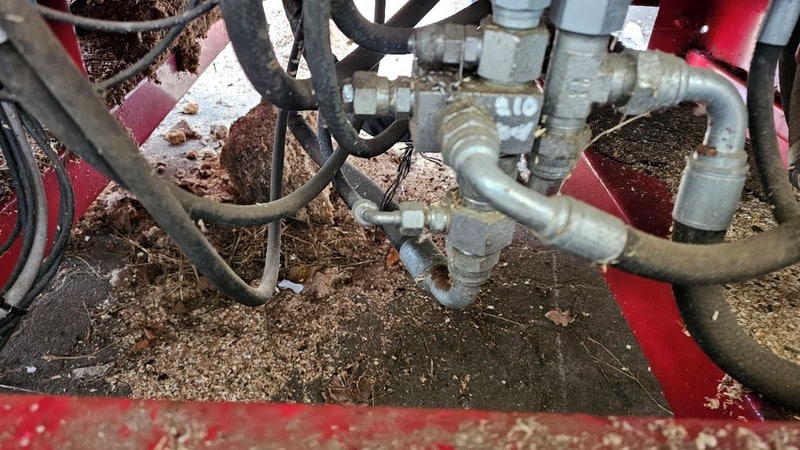
A hydraulic hose consists of an inner core, one or more reinforcing layers made of steel wire or textile, and an outer cover. The core and cover are made of elastomers, i.e., rubber-like materials. They are subject to constant stress: pressure fluctuations, temperature changes, bending movements on the machine, external ozone and UV radiation, and internal hydraulic oil. Each of these influences alters the material slightly. The rubber becomes harder, loses elasticity, and is more prone to cracking.
The insidious thing about it is:
The aging process is not always visible from the outside.
A hose can look perfectly fine externally and still have lost its performance capacity. That’s precisely why the standard uses fixed guideline values and not just visual inspection. The service life of a hydraulic hose assembly is technically limited. That’s the central point, and it’s well-founded in physics.
What does DIN 20066 say about hydraulic hose replacement?
DIN 20066 addresses hose assemblies made of elastomer hoses with wire or textile reinforcement for fluid technology. It includes recommendations for service life. The current version dates from 2021. The graphic in Figure 1 illustrates the classification system.
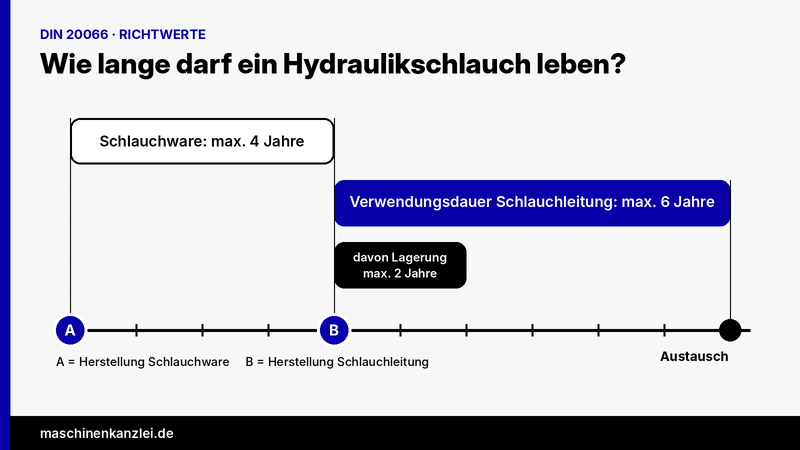
The graphic must be read carefully because it distinguishes between two time periods. The first period concerns the tubing itself, i.e., the meter-long hose, before it is assembled into a hose assembly. Its age from the manufacturing date of the tubing (point A) should not exceed four years. The second period begins with the manufacturing date of the finished hose assembly (point B). From this point, the service life, including any storage, should not exceed six years, and the storage of the finished hose assembly should last no more than two years.
This provides an overview of the most important guidelines:
- Hose material: Age up to the point of manufacture of the hose assembly is a maximum of four years.
- Hose assembly: Service life including storage is a maximum of six years.
- Storage of the finished hose assembly: maximum two years.
- For hose assemblies with increased requirements, a shorter guideline of two years applies; it represents the maximum permissible operating time.
The classification is important:
These are recommendations and guidelines, not a law with a fixed deadline.
However, they are a recognized basis for technical evaluation and thus an essential part of what is known as the state of the art for machinery. Anyone wishing to deviate from them needs a technical justification and should document it.
Anyone wishing to deviate from this needs a technical justification and should document it.
What are the operator's obligations under the Industrial Safety Ordinance?
This is the crux of the legal classification. The manufacturer of a machine develops it according to the Machinery Directive/Machinery Ordinance (from January 2027), conducts a risk assessment, builds the machine, and finally affixes the CE marking. This is the basic requirement for commissioning. Then comes the transfer of risk.
From this moment on, the responsibility for safe operation lies with the operator.
The German Ordinance on Industrial Safety and Health (Betriebssicherheitsverordnung 2015) obligates employers to ensure the safety and health of their employees when using work equipment. They may only provide work equipment that complies with applicable safety and health regulations. Crucially, the operator must always conduct a risk assessment for the intended use, taking into account their specific operational circumstances. This applies even if the machine is CE marked and all conformity documents are available.
This explicitly includes the inspection of hydraulic lines on work equipment.
The operator must ensure that hydraulic hose lines do not pose any danger and therefore replace them at appropriate intervals.
Driving a hose “until it bursts” is not a concept that would stand up to a risk assessment. It’s also rarely economically sound, as the resulting damage almost always exceeds the cost of the hose.
How long does a machine last and how often does the hose need to be replaced?
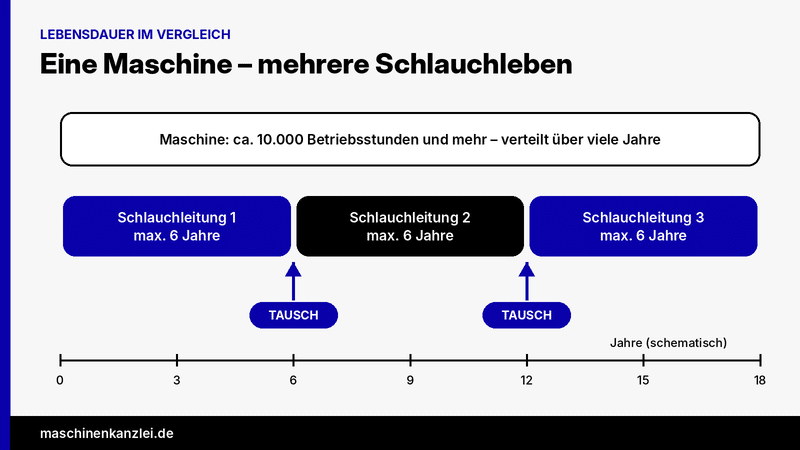
The lifespan of a machine is measured in operating hours rather than calendar years. For work machines like telescopic handlers, an average of around 10,000 operating hours is assumed, sometimes considerably more. These hours are not accumulated consecutively, but are spread over many years. A machine that is only used seasonally or occasionally can still have a low number of operating hours even after many years.
In my report, I substantiated this with an analysis of the used market. There, telescopic handlers older than a decade with only a few thousand operating hours are offered. Such machines are in demand and continue to be used. The machine’s lifespan thus almost certainly exceeds the four- to six-year service life of a single hose. Figure 2 illustrates this principle schematically.
The result of my expert opinion can be summarized in one sentence:
The hydraulic hoses need to be replaced several times during the machine’s lifetime.
A single replacement is not sufficient for a long-lasting machine. This is not specific to any one manufacturer or machine type, but rather a consequence of material aging.
Material defect or wear and tear: When is a burst hose considered a defect?
In sales law, this is the crucial question.
A defect exists if the machine does not have the agreed-upon characteristics or is not suitable for the intended use.
Normal wear and tear, on the other hand, is
no material defect.
A hydraulic hose is a classic wear part with a limited service life. If it fails after this time, that is initially the expected outcome.
The rating depends on three things:
- the age of the hose
- the actual operating conditions and
- the damage pattern.
Failure significantly after the recommended service life is more indicative of wear and tear and neglected maintenance by the operator. Conversely, failure soon after handover, perhaps even in the first year of operation, is more likely due to an error in the selection, assembly, or manufacturing of the hose assembly. Improper stress, such as excessively tight bending radii, chafing, torsion, or pressure spikes, can also be the cause. Determining which scenario applies in any given case requires a root cause analysis.
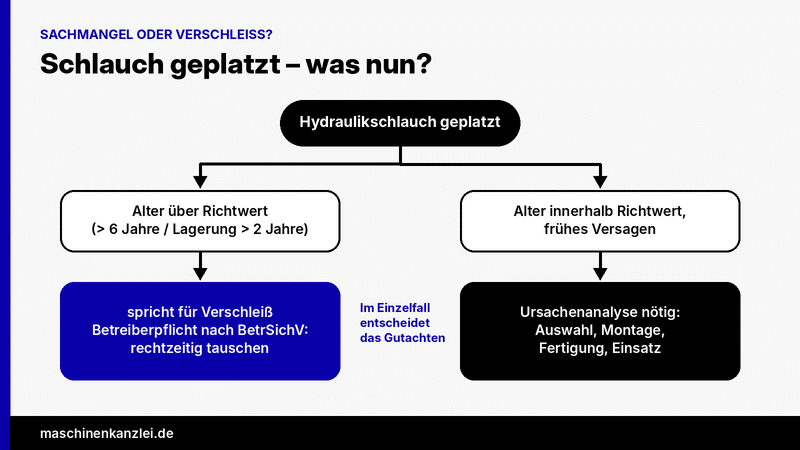
The graphic is deliberately simplified. In practice, documentation and maintenance history also play a role. Anyone who can prove that hoses were replaced according to schedule is in a much better position in the event of damage than someone who doesn’t even know the manufacturing date of the hose assembly.
Why this is important for the court and insurance company
In claims settlement, this classification often determines the outcome of a large sum of money. An insurance company checks whether replacing hoses is part of normal maintenance or whether it constitutes an insured loss. In the case of machine damage caused by a burst hose, the question of consequential damage also arises: Is the pump damage, contamination, or downtime the result of an insured event or the consequence of neglected maintenance?
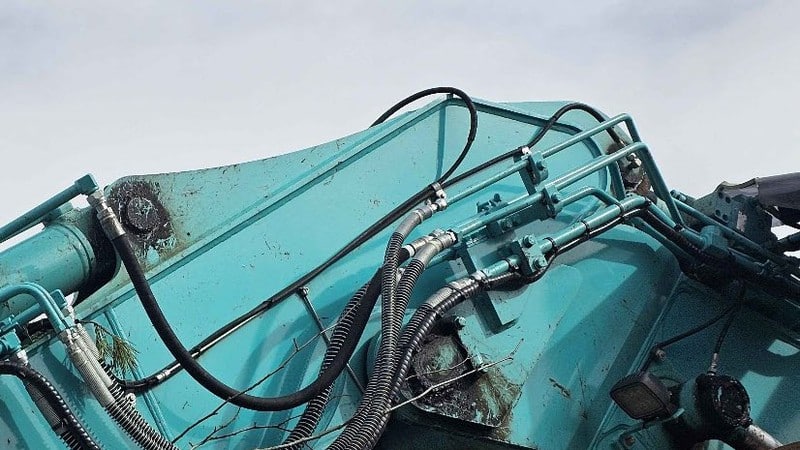
In court proceedings, the question is usually formulated as a question of evidence. In the expert opinion on which this article is based, the core technical question was essentially whether hydraulic hoses need to be replaced multiple times during the lifespan of a machine. The court appoints the expert, issues the order for the taking of evidence, and receives a written expert opinion. For those wondering what a court-appointed expert does, here is a typical example: They answer the posed technical question neutrally, comprehensibly, and based on standards, regulations, and empirical data.
If you, as the operator, find yourself in such a dispute, a look at the evidence is helpful. Crucial factors include the age of the hose assembly, the maintenance records, the risk assessment, and the defective hose itself. From this follows a simple, but often forgotten, rule.
Securing evidence in the event of hose damage: What you should do immediately
When a hose bursts, the reflex is understandable: repair it, wipe it up, and get back to work. From the perspective of evidence preservation at the machine, this is risky. The damaged hose is the most important piece of evidence for the cause of the damage. It allows for the assessment of the fracture pattern, manufacturing date, markings, and the condition of the fittings. If it is discarded, only speculation often remains later.
- Keep the defective hose, including the fittings; do not clean it and do not shorten it.
- Photograph the damaged area before making any changes, ideally with an overview image and a close-up.
- Read and note the markings on the hose assembly, especially the manufacturing date.
- Record the machine’s operating hours at the time of the damage.
- Compile maintenance records, test reports and the risk assessment.
- In case of significant damage, consult a machinery expert early on, before the machine is repaired.
The last point in particular is often underestimated. Securing evidence through an expert initially costs money,
However, it often saves many times that amount if the cause is later disputed.
Practical recommendations for replacing hydraulic hoses
The findings lead to a simple procedure that has proven effective in practice. It improves machine availability and simultaneously provides protection in the event of damage.
- Record the manufacturing date of each hose assembly and document it in the maintenance plan. It is usually printed on the fitting or the hose itself.
- Determine and justify replacement intervals in the risk assessment. DIN 20066 provides the guideline values; operating conditions determine whether these intervals can be shortened.
- Regular visual inspection by a qualified person for cracks, chafing, leaks, deformations and damage to the fittings.
- Do not store spare hoses for years. Storage should not exceed two years; otherwise, half of their service life will already be used up.
- Check the installation: bending radii, twisting, abrasion protection and distance to hot components.
- Document all exchanges and reviews in writing. In case of a dispute, the document counts, not the memory.
Scheduled replacement costs money and time. An unplanned breakdown in the middle of operation usually costs more, because the machine is unavailable precisely when it’s needed. Treating hydraulic hoses like wear parts, rather than permanent components, increases system availability and reduces liability risks.
How much does an expert report on hydraulic damage cost?
I hear this question frequently, and the only honest answer is “it depends.” The cost of an expert opinion depends on the scope of the task: Is a brief statement on a single technical question sufficient, or is an on-site inspection with examination of the defective component, evaluation of maintenance records, and a detailed root cause analysis required? Travel time, laboratory tests, and, if necessary, the analysis of operational data also need to be factored in. For expert opinions commissioned in court, the fees are governed by the German Act on the Remuneration and Compensation of Judges and Public Prosecutors (JEVG).
A tip from practical experience:
A private expert opinion is particularly useful if it is commissioned early, while the evidence is still available.
Those who only bring in an expert after a year of dispute with the opposing side often no longer have a hose to examine.
Frequently asked questions about hydraulic hose replacement
How long can a hydraulic hose be used?
According to DIN 20066, the maximum service life is six years, including a maximum storage period of two years. A shorter guideline applies to hose assemblies with increased requirements.
Who is responsible for the exchange?
The operator or employer. According to the Industrial Safety Ordinance, they must ensure that hydraulic hose assemblies do not pose any danger and therefore replace them at appropriate intervals.
Is a burst hydraulic hose considered a defect?
This depends on the age, operating conditions, and the nature of the damage. Age-related failure after the end of its service life is more indicative of wear and tear. Early failure is more likely due to a fault in selection, assembly, or manufacturing. In this case, an expert analysis of the causes is helpful.
Can I continue to use a hose after six years?
This value is a guideline. Continued use must be technically justified and documented. In case of doubt, replacement is the safer and usually also the more cost-effective solution.
Is the CE marking of the machine sufficient?
No, because the CE marking certifies that the machine meets the requirements upon commissioning. The operator remains responsible for conducting a risk assessment for the specific use in the workplace.
What do I do if a hose bursts and I have to argue about it later?
Secure the defective hose, take photos, note the markings and operating hours, compile maintenance documents and involve an expert early on.
Conclusion
Hydraulic hoses are wear parts with a limited service life. DIN 20066 recommends a maximum of six years, including storage; the German Ordinance on Industrial Safety and Health (Betriebssicherheitsverordnung) makes the operator responsible for timely replacement; and the lifespan of a machine generally exceeds this period considerably. Therefore, hydraulic hoses must be replaced several times during a machine’s lifespan. Planning and documenting this process protects people, machines, and one’s own legal position.
If you need to assess damage, whether as an operator, insurer, lawyer, or court, I can support you as a machinery expert with root cause analysis and technical evaluation. Write to me or call: The sooner I see the defective hose, the more reliable the assessment will be.