
What is this article about?
A new machine is delivered, commissioning begins, and suddenly the to-do list grows longer every day. A few outstanding issues turn into extensive defect lists, acceptance is delayed, the relationship between manufacturer and operator becomes strained, and the technical dispute often ends up in court. But why does this happen so often? What role do missing specifications, requirements documents, and functional specifications play? And why do even hundreds of entries in a defect list usually fail to solve the underlying problem?
This article explains why to-do lists often lead to a dead end, how a publicly appointed and sworn expert objectively determines technical facts, and why early evidence gathering is often the crucial step to avoid high follow-up costs, production losses, and lengthy legal disputes.
What is a to-do list for a machine problem?
The customer who orders and later operates the machine almost always works with a to-do list after delivery of a machine that does not “work” immediately, and often calls it a defect list.
Defining a technical to-do list
In mechanical engineering, a to-do list has no standardized definition. In practice, it refers to a continuously updated overview of all open technical issues that need to be addressed between the manufacturer and the operator during commissioning, acceptance testing, or ongoing operation of a machine.
It is important to distinguish between:
A to-do list is not automatically a defect list for machine problems.
It often contains both actual shortcomings and open questions, suggestions for improvement, or points for agreement.
A technically precise definition is:
Why to-do lists are often called defect lists
The main difference can be summarized in one sentence:
A to-do list documents all outstanding items, while a defect list only lists actual material defects.
In practice, however, both terms are often used synonymously, even though they do not mean the same thing technically and legally.
Since many of these points are initially perceived as “mistakes” from the operator’s point of view, the to-do list quickly evolves in common parlance into a so-called
List of defects.
In fact, only some of the listed points constitute a defect in the technical or legal sense.
This is precisely where the potential for conflict lies:
A to-do list is a working document, while a list of defects is an evaluation.
Whether an entry actually constitutes a defect can only be determined by comparing the contractually agreed-upon condition with the actual condition of the machine. This comparison requires a review of the contract documents, the technical specifications, and often also an assessment by an independent expert.
Why defect lists in mechanical engineering are getting longer and longer
It is a typical phenomenon in mechanical and plant engineering that defect lists do not get shorter during commissioning, but often get continuously longer.
On the one hand, this is a normal part of any commissioning process, as technical discrepancies, adjustment needs, or individual errors only become apparent under real operating conditions. On the other hand, the customer or subsequent operator often finds during commissioning that agreed performance characteristics, functions, or process objectives are not achieved, or not in the expected manner.
In practice, this leads to the following:
Actual technical defects may be mixed with subsequent change requests, optimization ideas, or different interpretations of the contractual agreements.
This is precisely where the technical and often legal problems begin. The lines between manufacturer and customer become increasingly drawn: While the manufacturer insists on the timely acceptance of the machine and sometimes considers the outstanding issues irrelevant for acceptance, the customer regularly insists on the complete resolution of the defect list.
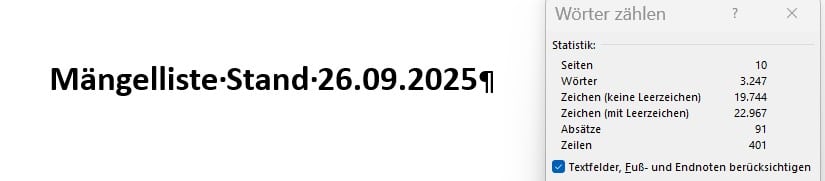
This development often leads to delays in commissioning, the manufacturer’s withdrawal from ongoing coordination processes, and significant potential for conflict. In such situations, an independent expert can play a crucial role by objectively evaluating each complaint from a technical perspective, distinguishing between actual defects and mere optimization requests or subsequently changed expectations. This brings the discussion back to the technical level and creates a sound basis for further cooperation or, if necessary, legal clarification.
Missing specifications as a cause of technical conflicts
In many machine projects, it ultimately remains unclear which features and performance characteristics were actually ordered and what performance the delivered machine is contractually obligated to provide. This is often due to incomplete or inadequately formulated specifications. Without a meaningful requirements specification, a precise statement of work, or unambiguous technical requirements, considerable room for interpretation arises.
These differing opinions become apparent at the latest during commissioning or acceptance testing. The operator often believes that certain functions are owed or that the machine has a defect. The manufacturer, on the other hand, maintains that the machine was delivered in accordance with the contract and meets the agreed requirements.
These differing interpretations almost inevitably lead to conflicts. The real point of contention is then no longer whether a problem exists, but rather how the machine’s performance should be measured in the first place.
In such cases, an objective clarification can only be achieved through an independent technical assessment. The expert first determines the contractually agreed-upon target condition based on the available contract documents, technical specifications, and recognized engineering standards. He then compares this target condition with the machine’s actual current condition.
Only this systematic technical comparison of target and actual values allows for reliable statements about whether a defect exists, whether there are merely different expectations, or whether requests for changes or optimization are wrongly assessed as defects.
In this way, the discussion of subjective assessments is placed on a comprehensible and technically sound basis. This creates clarity for both contracting parties and forms the basis for an appropriate solution to the conflict.
Different expectations of manufacturer and operator
A major reason for long lists of defects and to-do lists lies in the differing expectations of the contracting parties.
In many machine projects, it is not clearly traceable after delivery which technical properties and functions were actually agreed upon.
The cause is often incomplete or imprecise specifications, missing requirements specifications and specifications, or generally formulated performance descriptions.
While the customer and subsequent operator assumes that certain functions, services, or quality characteristics are owed, the manufacturer often maintains that the machine fully complies with the contractual agreements. Both sides base their arguments on their own interpretation of the contract and the technical requirements.
These differing perspectives typically only become apparent during commissioning or machine acceptance. Instead of objectively evaluating individual technical issues, extensive to-do lists are created, lumping together alleged defects, optimization requests, rework, and open points for coordination. With each subsequent meeting, the list often grows longer, without a clear distinction being made between an actual defect, an additional customer requirement, or a misunderstanding regarding the original order.
The result is lengthy discussions about the content of the to-do list instead of about the actual technical issue:
Does the delivered machine meet the contractually agreed requirements or not?
As long as this central question remains unanswered, defect lists often develop into a protracted dispute between the manufacturer and the operator.
A clear and objective clarification is only possible when the contractually agreed-upon target condition is unambiguously determined and compared with the machine’s actual current condition. It is precisely at this point that an independent expert can contribute by replacing differing interpretations with an objective technical assessment and placing the discussion on a sound basis.
Actual technical errors are an additional factor.
Besides unclear or insufficient specifications, actual technical defects also contribute to the continuous growth of defect lists and to-do lists during machine commissioning. Especially in special-purpose machine construction, it is not at all unusual for a newly built machine not to reach its final target state immediately after assembly.
During commissioning, execution errors, assembly deviations, or programming errors in the control software are frequently discovered, which only become apparent under real operating conditions. Similarly, optimizations to the programming, parameter adjustments, or minor rework may be necessary. Such tasks are, to a certain extent, part of the commissioning process for complex special-purpose machines and can often be rectified quickly.
In practice, these technical issues are almost always documented in a defect list or to-do list. With each subsequent commissioning phase, new entries are added, while completed items are either removed or replaced with subsequent items. This often results in very extensive lists whose contents become increasingly difficult to navigate.
The real problem is that these lists mix together very different issues. Actual defects are listed alongside temporary adjustments, optimization measures, remaining assembly work, or additional customer requests.
As a result, it is often no longer clear to the parties involved which points constitute a breach of contract and which are simply part of the normal course of commissioning.
This is precisely where technical prioritization is necessary. An independent expert assesses each individual point based on the contractual agreements and recognized engineering standards. They differentiate between actual defects and temporary commissioning work, optimization measures, or mere change requests, thus creating an objective basis for further action. Instead of an ever-growing list of defects, this results in a comprehensible technical assessment that helps the parties involved resolve the conflict on a factual level and address the truly relevant issues in a targeted manner.
The real problem: The to-do list doesn't resolve the conflict.
During the commissioning of a custom-built machine, new items appear on the to-do list almost daily. This is not unusual at first. Hardly any complex machine reaches its final target state immediately after assembly. Settings must be optimized, programs adjusted, sensors calibrated, and individual components aligned. Only under real operating conditions do many technical relationships and interactions become apparent, which were not fully foreseeable beforehand.

However, it is precisely these interactions that lead to the to-do list constantly growing. When one item is addressed, new issues often arise elsewhere. Furthermore, the same observation might be assessed by the operator as a significant defect, while the manufacturer considers it a standard optimization measure during commissioning. Without an objective technical basis, the to-do list therefore quickly evolves into a collection of diverse issues whose legal and technical significance can vary considerably.
The real problem is that the to-do list itself does not provide an answer to the crucial question:
Is there actually a defect, or is this simply a normal commissioning procedure?
As long as this distinction is not made, the discussion will go in circles. The list will grow longer without the actual conflict being resolved.
The practical consequences are significant. Acceptance of the machine is delayed or refused altogether. The operator cannot use the system productively, or only to a limited extent, while the manufacturer considers its contractual obligations fulfilled. Production losses, delayed deadlines, contractual penalties, and substantial financial damages can result. At the same time, positions between the contracting parties harden, so that what was initially a technical problem increasingly escalates into a legal dispute.
It is precisely at this point that an independent technical assessment is required. A mechanical engineering expert doesn’t simply work through the to-do list point by point, but examines each entry against the contractual agreements and the recognized rules of technology. By objectively comparing the agreed-upon target condition with the actual condition of the machine, they distinguish genuine defects from typical commissioning work, optimization measures, and misunderstandings. Only this objective classification creates the
This provides a basis for a sound technical assessment and opens up the possibility for the parties involved to resolve the conflict in a targeted and economically sensible manner.
Why technical defect lists often end in a dead end
As the list of defects grows longer, the conflict between the manufacturer, the client, and the operator often intensifies in many projects. Instead of analyzing the individual points technically, the discussion frequently shifts to a personal and legal level. Each party represents its own perspective and tries to bolster its position.
The crucial question is increasingly being pushed into the background:
This provides a basis for a sound technical assessment and opens up the possibility for the parties involved to resolve the conflict in a targeted and economically sensible manner.
A systematic root cause analysis is surprisingly rare in practice. Instead, assumptions, interpretations, and emotions replace objective technical assessment. As a result, the list of defects continues to grow, while the actual causes remain unclear. Without an independent technical analysis, this creates a dead end from which those involved can often only extricate themselves with the support of an expert.
The better alternative: Early support from an expert.
Many conflicts in mechanical engineering could be significantly shortened or even completely avoided if an independent, publicly appointed and sworn expert were involved .
involved in the project at an early stage
Ideally, this should be done during the creation of the requirements specification or at the latest during the technical review of the functional specification. This allows unclear specifications and conflicting requirements to be identified before they later lead to extensive to-do lists and defect lists.
In practice, however, experts are usually only called in when the conflict has already escalated: The machine has not been accepted, the list of defects is constantly growing, and the parties are on the verge of or already in the middle of a legal dispute.
The decisive advantage of an independent technical assessment lies in its objectivity. Even if the publicly appointed and sworn expert is commissioned by one party, their task is to provide a neutral and comprehensible technical evaluation of the facts.
Based on a structured analysis, actual
Material defects, execution errors and deviations from the contractually owed target condition were identified and documented in a comprehensible manner.
At the same time, a reliable technical evidence record is created, which not only provides guidance to the parties involved, but can also serve as qualified party submissions or as a basis for legal proceedings in the event of a dispute.
How an expert deals with a list of defects in machinery
When a mechanical engineering expert is involved in a developing or existing dispute, they typically receive extensive to-do lists or lists of defects. These often comprise numerous pages of alleged errors, open issues, rework, and requested changes.
However, these lists, taken on their own, do not allow for a reliable statement as to whether there are actually material defects or whether there are differing expectations of the contracting parties.
From an expert perspective, the technical assessment therefore does not begin with the list of defects, but with a review of the contractual basis. First, all available documents are requested and evaluated. These include, in particular, the contract, the specifications , the functional specifications, technical specifications, drawings, functional descriptions, acceptance protocols, and the technical correspondence between the manufacturer and the customer. Only these documents make it possible to determine the contractually owed target condition of the machine in a comprehensible manner.
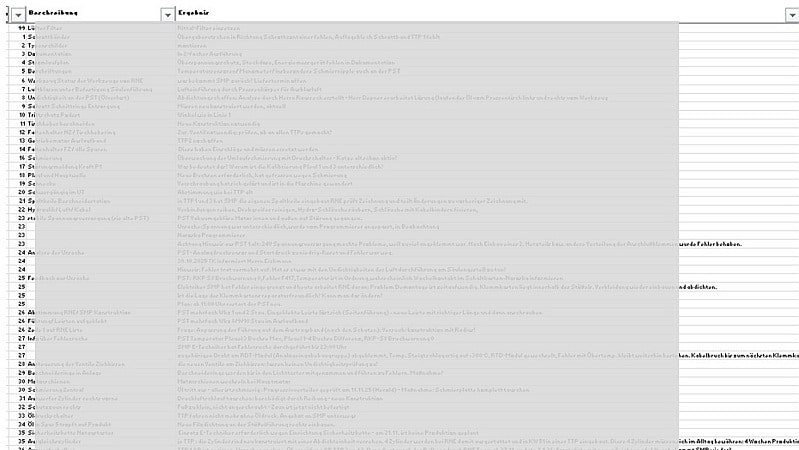
Based on this, an on-site inspection of the machine is then carried out. There, the individual items on the defect list are not considered in isolation, but are technically examined using objective testing criteria. Crucially, this involves comparing the contractually agreed-upon target condition with the actual existing condition. Only this systematic target-actual comparison allows for a reliable determination of the facts.
During the assessment, it often becomes apparent that individual items on the defect list do not represent actual defects, but rather stem from misunderstandings, unclear specifications, or subsequently changed requirements. At the same time, technical deviations or execution errors are frequently discovered that were not even included in the original to-do lists. Therefore, the expert’s task is not simply to confirm or refute the defect list, but rather to…
to document the actual technical condition of the machine independently and verifiably.
The result of this investigation is an expert report that clearly presents all relevant facts, technical assessments, and conclusions. This report provides an objective basis for decision-making for both the client and the manufacturer, and simultaneously forms the technical foundation for the legal evaluation of the dispute. Furthermore, it enables a transparent determination of potential costs for remedying defects or other damages, thus contributing significantly to a fair resolution of the conflict.
Practical example: From machine problem to technical solution
After the commissioning of a special press, it quickly became apparent that the contractually agreed availability of the system was not being met. Unplanned shutdowns occurred repeatedly, production was regularly interrupted, and eventually structural damage in the form of cracks and fractures in components even appeared. Individual repairs took up to a week, resulting in significant production losses and jeopardizing the operator’s delivery deadlines.
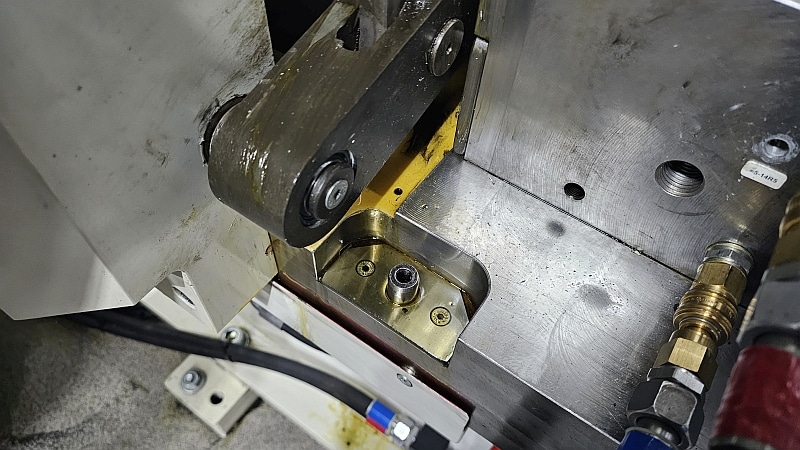
The conflict between the manufacturer and the operator escalated. Instead of systematically analyzing the causes of the recurring damage, repeatedly damaged components were replaced. However, the underlying cause remained unchanged. As long as the cause of the damage is not eliminated, the newly installed components will also fail again in many cases.
Due to considerable time constraints, an independent expert was commissioned to document the evidence. First, the existing to-do lists and defect lists were evaluated, the technical condition of the press was comprehensively documented, and all relevant facts were secured. The expert report clearly demonstrated that the measures taken so far had not eliminated the root cause of the damage.
Based on this objective technical assessment, the operator decided to commission a specialized company to sustainably eliminate the cause of the damage. Following the implementation of the technical measures, the press now operates reliably and achieves the required availability. The costs for the expert report, the necessary repairs, and the resulting production losses were subsequently claimed from the manufacturer.
An example from an internal party "list of deficiencies"
In an internal party “list of deficiencies” I had to read: The machine vibrates strongly .
The questions immediately arose:
- What does “strong” mean in this context?
- Is anything defined in the specifications regarding vibrations , or is anything promised in the requirements document ?
- Where and by what measurement should the vibration be detected?
- What is the actual consequence of the “strong vibration”?
It is possible that vibrations might cause connections to loosen. However, these are generally technical hypotheses that are difficult or impossible to prove in court proceedings, unless cross-sections break and this is visible in the fracture cross-section.
Therefore, it is important to consider the following when reversing a purchase agreement for a machine.
clearly identifiable deviations
in the
To highlight and name them.
Therefore, if it is determined that, for example, the profiles in an aluminum extrusion plant are gripped incorrectly several times within a certain period, resulting in a standstill of the plant and a necessary restart, then this is an objective finding that any court expert will immediately confirm.
It can then be deduced that, due to the production shutdowns, a potentially previously defined availability is not achieved and/or cycle times are not met.
This is how companies avoid endless to-do lists and defect lists when machine problems arise.
Strategies for avoiding lengthy to-do lists and defect lists are generally known.
However, they are rarely implemented consistently in practice.
The cause is often that essential foundations are lacking at the beginning of a project or are not consistently adhered to as the project progresses.
The starting point is a comprehensive requirements specification that clearly describes all technical and functional requirements. Based on this, the manufacturer should create a complete functional specification that transparently documents how these requirements will be technically implemented. Only if both documents are clear and consistent can it later be efficiently assessed whether the delivered machine fulfills the contractually agreed scope of performance.
Equally important is a structured change management process. Technical changes should never be agreed upon and implemented informally between designers or project managers via email or telephone. Every change must be documented, approved by both contracting parties, and incorporated into the contract documents. Only in this way can the agreed scope of services be traced at all times.
If initial disagreements arise during commissioning regarding the machine’s function or performance, one should not wait until extensive lists of defects and legal disputes develop.
early involvement
An independent, publicly appointed and sworn expert clarifies the technical facts, secures evidence, and helps resolve conflicts based on objective facts. This often avoids significant costs, lengthy production downtimes , and time-consuming legal proceedings.
If no other option is possible: reversal of the purchase agreement.
Publicly appointed and sworn experts do not provide legal advice. Therefore, legal counsel from experts is essential when it comes to rescinding a purchase agreement.
A fundamental prerequisite for the rescission of a purchase agreement (§ 433 BGB) is the existence of a defect. According to § 434 BGB, a defect in the purchased item exists if the goods do not conform to the agreed-upon specifications.
The existence of a defect entitles the seller to exercise the warranty rights for defects under Section 437 of the German Civil Code (BGB) .
If rectification is excluded due to the nature of the defect, for example because the item is irreparable, then subsequent performance is completely ruled out.
The legal basis for the reversal of a machine purchase includes, for example:
- Relevant principles of sales law ( German Civil Code §§ 433 ff .)
- Definition: Material defect ( § 434 BGB ) – agreed quality vs. actual quality,
- Buyer’s obligations: notification of defects, deadlines, cooperation
- Subsequent fulfillment,
- Withdrawal / Reversal ( § 439 BGB ).
Experts and lawyers working hand in hand
The best result is achieved when the client…
experienced machinery experts and lawyers
is accompanied, and as early as possible, as soon as the conflict between the customer/buyer and the manufacturer/supplier begins to develop.
That’s perfectly understandable. The experienced lawyer is naturally familiar with contract law. This can give rise to various questions that influence the course of the technical assessments and thus the technical evidence preservation.
The experienced lawyer is not a machinery expert. Likewise, the machinery expert is not a lawyer.
That’s why the team of experts is needed. The emphasis is on “experts.” When it comes to a large investment and resolving a technical-legal conflict, efficiency combined with know-how is essential.
If a request is placed here regarding the topics of “reversal of purchase agreement” or ” securing evidence “, my first recommendation is:
Legal support from professionals is necessary.
Due to our many years of experience and established collaborations in this field, we can recommend a large number of outstanding lawyers to our clients on this topic.
Conclusion
A long to-do list or list of defects is rarely the actual cause of a machine problem.
Rather, it is a symptom of the fact that
Technical requirements may be interpreted differently, or actual errors may not have been systematically investigated.
As long as individual list items are discussed without comparing the contractually owed target state with the actual state of the machine, the conflict persists and often causes significant costs, production losses and time-consuming legal disputes.
An independent, publicly appointed and sworn expert provides clarity precisely at this point. Through an objective examination, verifiable evidence gathering, and a structured technical comparison of target and actual conditions, facts are separated from assumptions, and a sound basis for decision-making is established. The earlier this technical assessment takes place, the greater the chance of resolving conflicts out of court, limiting financial losses, and avoiding protracted disputes. Ultimately, it is not the length of a list of defects that matters, but the quality of the technical evidence.